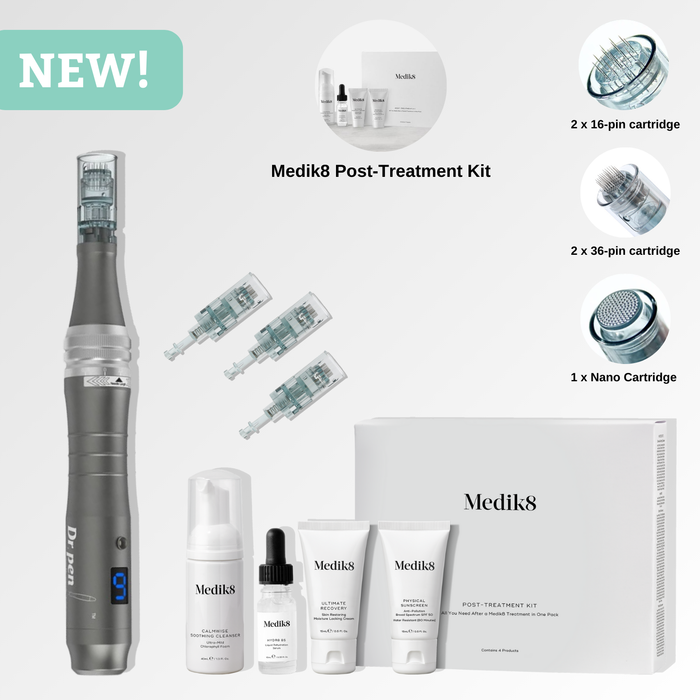
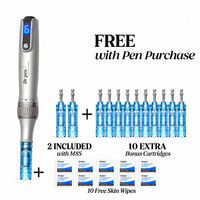

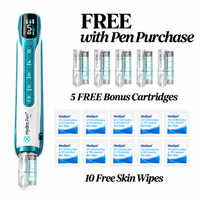

Sharing a microneedling pen at home is not made safe simply by attaching a new needle cartridge. The cartridge is an obvious contamination risk, but hands, the pen body and the cartridge connection can also become contaminated during use. The safest household approach is not to share a personal-use pen, and never to reuse a needle cartridge, even on yourself. Professional use of a reusable handpiece requires manufacturer-approved cleaning procedures and infection-control practices, not just a quick wipe.
Can you share a microneedling pen at home?
Treat a personal-use pen as belonging to one person unless the manufacturer explicitly permits use across patients and provides validated reprocessing instructions. Reprocessing means the cleaning and disinfection or sterilization required to make reusable equipment suitable for its next use.
A replacement cartridge addresses only the disposable part of the system. It does not prove that the reusable components are free from contamination or that the device was designed for multiple users.
These distinctions matter:
- Sharing a cartridge: Never do this, including between partners or family members.
- Reusing your own cartridge: A single-use cartridge must be discarded after its session, not cleaned and saved.
- Sharing the handpiece: Do not assume this is permitted because the cartridge detaches. Check the exact model's labeling and reprocessing requirements.
Having separate personal pens removes one cross-user exposure route, but it does not make unsupervised treatment risk-free. Professional assessment remains the safer choice for procedures that puncture living skin.
Where contamination can travel
When people share a microneedling pen at home, infection control involves more than the needle tips. A treatment setup can include several surfaces that hands, used equipment or fluids may contact.
| Component or surface | Potential problem | Practical boundary |
|---|---|---|
| Needle cartridge | Used needles may carry blood, skin material or microorganisms | Use a new sterile, compatible cartridge for every session and discard it afterward |
| Pen exterior and controls | Contaminated hands or splashes may transfer material to surfaces | Follow the model-specific cleaning instructions and use an appropriate barrier where directed |
| Cartridge connection | Contamination may be difficult to see or reach | Do not assume changing the cartridge cleans the connection |
| Work surface and supplies | Used gloves or equipment may contaminate clean items | Keep clean supplies separate from used equipment and waste |
Blood-contaminated sharps can create exposure to hepatitis B, hepatitis C or HIV. Bacterial contamination can also lead to skin infection. The actual risk depends on the source, the material present and how exposure occurred; sharing does not mean transmission has definitely happened.
No visible blood does not establish that equipment is clean. Likewise, a pen that looks spotless has not necessarily undergone the processing required by its manufacturer.
Why sharing with a partner or family member still matters
Using a microneedling pen at home with someone you trust does not remove the biological risks. A person may have an infection without symptoms, and skin can carry bacteria without looking infected.
Living together is not equivalent to sharing a device that punctures skin. Nor does knowing someone's medical history establish that a used cartridge or contaminated handpiece is safe.
Active cold sores, skin infections, open wounds or inflamed acne are reasons to postpone treatment and seek clinical advice. A separate pen does not make needling through those areas appropriate. People with impaired healing, immune suppression or bleeding-related concerns also need individualized medical assessment.
A professional clinic may use a reusable handpiece across clients because its labeling permits that use and staff follow the required infection-control procedures. That is not evidence that the same approach can be reproduced with household cleaning supplies.
What cleaning and protective barriers can actually do
A cartridge cannot be cleaned for another session
For anyone using a microneedling pen at home, the cartridge should be treated as a sterile, single-use component, not a washable accessory.
Choose a cartridge explicitly compatible with the exact pen model. Check the packaging, expiry date where provided and sterile labeling before opening it. Do not use a cartridge from torn, wet or previously opened packaging, or one whose sterility is uncertain.
Rinsing, soaking in alcohol or applying a household disinfectant does not provide a validated method for making used needle cartridges safe. It also does not restore damaged needle tips.
If a cartridge has already contacted someone else's skin, replacing it is necessary. Whether the handpiece can be used again depends on its labeling, the contamination involved and the manufacturer's instructions.
A sleeve is a barrier, not a sterilization method
The Dr. Pen A20 Microneedling Pen Protective Sleeve (10pcs) provides a disposable barrier for the A20's covered exterior surfaces. It can help reduce contamination of those surfaces during handling.
A sleeve does not sterilize the device, clean a cartridge connection or make a single-user device suitable for multiple people. It must be discarded after use, and removing it carelessly can transfer contamination to the pen or hands.
Before using a microneedling pen at home, obtain the instructions for that exact model rather than borrowing a cleaning routine from a different device. Look for the permitted cleaning agent, application method and any required disinfectant contact time. A quick wipe is not equivalent to following a specified disinfection process.
Do not immerse a motorized handpiece or allow fluid into openings unless its instructions explicitly permit it. If blood or fluid reaches an area that cannot be processed as directed, stop using the device and ask the manufacturer how to proceed.
Keep used cartridges out of household recycling
Place used cartridges directly into an appropriate sharps container, following local disposal rules. Do not leave them loose on a counter, put them in recycling or drop exposed sharps into a household trash bag.
Avoid touching or manipulating the needle tips during disposal. Keep the container away from children and pets, and do not overfill it.
Handle contaminated waste separately from unopened cartridges and other clean supplies. Wash your hands after handling used equipment or removing gloves. Gloves do not replace hand hygiene, and contaminated gloves can transfer material to a phone, drawer handle or replacement cartridge package.
These steps reduce handling risks. They do not establish that a shared pen has been adequately reprocessed.

A shallow setting does not solve the sharing problem
A lower depth setting on a microneedling pen at home does not make shared equipment hygienic. The dial controls a treatment parameter, not whether microorganisms are present. Actual skin penetration also depends on the device, pressure and treatment site.
There is no universal needle-depth number that makes a shared pen safe. Do not choose a setting based on the assumption that avoiding visible bleeding eliminates infection risk. In particular, the ability to select a deep setting does not mean it is appropriate for home treatment; our guide explains why 3 mm microneedling is unsuitable for at-home use.
In the U.S., FDA clearance is specific to the device and its authorized uses. It is not blanket permission for unsupervised treatment. The FDA's microneedling device guidance states that it has not authorized microneedling medical devices for over-the-counter sale.
What to do if you have already shared equipment
If you have shared a microneedling pen at home, first establish whether a cartridge was reused, whether someone else's blood could have contacted your skin and whether the skin was punctured. Do not continue treatment while trying to resolve the uncertainty.
If a used cartridge punctured your skin, wash the area gently with soap and running water. Do not scrub, squeeze puncture sites or apply bleach. Seek urgent medical assessment that day rather than waiting for symptoms.
Tell the clinician when the exposure happened, whether the same cartridge was used and what you know about blood contact. Bring your hepatitis B vaccination information if available. Do not handle exposed needles to investigate what happened.
Possible HIV exposure requires prompt assessment. The CDC explains that HIV post-exposure prophylaxis must begin within 72 hours, and starting sooner is better. A clinician will determine whether it is indicated. Hepatitis B vaccination status and other exposure details may also affect care and follow-up testing.
Sharing only the handle is a different exposure from being punctured with another person's used needles. Describe the situation accurately rather than assuming either that transmission occurred or that there was no risk.
Seek medical care for worsening redness, warmth, swelling, increasing pain, pus or fever. Rapidly spreading redness or feeling seriously unwell warrants urgent evaluation.
Check authenticity, compatibility and permitted use separately
When choosing a microneedling pen at home, three separate checks matter: whether it is genuine, whether its cartridges are compatible and whether its intended use matches your situation.
Retail authenticity and infection control answer different questions. When shopping for authentic sneakers, provenance helps establish whether a product is genuine. With skin-puncturing equipment, genuine branding is only one check; it cannot establish whether a previously used device is suitable for reuse.
For a pen offered secondhand or passed between friends, ask whether it is labeled for one person only, whether its use history is known and whether the manufacturer provides an applicable reprocessing procedure. Uncertain answers are reasons not to use it, not reasons to improvise a stronger disinfectant.
Manufacturer-verifiable authenticity also does not establish cartridge sterility after a package has been opened. Keep packaging checks, model compatibility and infection-control requirements separate.
If you are deciding between personal equipment and a clinic, our comparison of SkinPen microneedling and at-home pens explains the differences in treatment setting and professional supervision.
Frequently asked questions
Can my partner use my pen with a new cartridge? A new cartridge is essential, but it does not establish that sharing the handpiece is permitted or safe. Follow the device's labeling. For personal-use equipment, keep the pen assigned to one person.
Can alcohol make a used cartridge safe? No. Alcohol soaking is not a validated method for reprocessing a single-use cartridge. Discard it after its session, even if you plan to be its only user.
Does an anti-backflow cartridge make sharing safe? Do not assume so. Any such claim must be verified for the exact cartridge and device. A design feature does not replace surface cleaning, required reprocessing or the manufacturer's restrictions on sharing.
Can a clinic share a microneedling pen at home-style users cannot? A clinic may reuse an appropriately labeled handpiece across patients under its required infection-control procedures, with a new sterile cartridge for each patient and session. Professional location alone is not enough; the device labeling and procedures still matter.
Should I throw away the whole pen after someone else uses it? Stop using it until you have checked the manufacturer's guidance. A single-patient device must not be reassigned, and inaccessible contamination may prevent safe reuse. Do not attempt an improvised internal cleaning procedure.
Confirm the model before choosing accessories
Before ordering replacement cartridges or protective barriers, check the model printed on your pen and obtain its official instructions. Dr. Pen Store support can help with product identification and compatibility questions. If the device has been shared or contaminated, ask the manufacturer about its permitted reuse before buying accessories, and seek medical advice promptly for any possible blood exposure.