

If you’re researching “treatment microneedling” ahead of a wedding or major event, timing matters as much as the procedure itself. Temporary redness may settle before the skin’s texture, sensitivity or tolerance for makeup returns to normal. Meanwhile, the collagen-related improvements people want usually develop gradually, not overnight.
A conservative approach is to start planning several months ahead and leave at least four weeks between a final professional session and an important event, with a longer buffer when your clinician recommends it. This is a planning cushion, not a guarantee of recovery or a universal medical rule. If the event is close, keeping your skin stable may be the better choice.
What microneedling can realistically do before an event
Microneedling uses small needles to create controlled skin injuries that trigger a healing response. Depending on the device, treatment plan and skin concern, it may improve the appearance of acne scars, fine lines or uneven texture.
It is not an instant facial, a reliable treatment for active breakouts or a way to guarantee flawless wedding photographs. One session may produce subtle changes, while some concerns require a series of appointments and months of reassessment.
The American Academy of Dermatology’s microneedling guidance explains that results appear gradually as the skin produces collagen. That distinction matters when booking a microneedling treatment: looking less red does not mean the final result has arrived.
Choose one realistic priority with your clinician, such as softening the appearance of established acne scars. Trying to address scars, pigmentation, pores and every fine line before one deadline can encourage unnecessary procedures or overly ambitious expectations.
Work backward from your wedding or event date
Build the schedule around your earliest important appearance, not just the ceremony. Engagement photos, a makeup trial, a rehearsal dinner and travel may all need recovery time of their own.
The following calendar is deliberately conservative. It assumes elective treatment for a fixed event date, not treatment that must happen on a particular medical schedule.
| Time before the event | Practical planning approach |
|---|---|
| Three to six months or more | Arrange a consultation, identify the main concern and discuss whether a treatment series is realistic. |
| Eight to twelve weeks | If your clinician recommends treatment, leave room to assess your response before considering another session. |
| Four to six weeks | Discuss whether a final, previously tolerated session is appropriate. Allow longer for deeper treatment, pigment concerns or slow recovery. |
| Less than four weeks | Avoid starting microneedling for the first time. Do not assume a repeat session is safe simply because an earlier one healed quickly. |
| Final week | Prioritize a familiar skincare routine and avoid elective needling or other new irritating procedures. |
Do not compress a treatment series to fit the invitation date. Session spacing should follow the device instructions, treatment intensity and your clinician’s assessment of healing.
A microneedling treatment that would otherwise be reasonable may still be a poor fit for a calendar filled with outdoor events, long flights or occasions when you need makeup.
Recovery time and results are different timelines
There are three separate milestones to consider: when the skin looks less inflamed, when normal activities and products can resume and when meaningful improvement becomes visible.
Redness, tightness, tenderness, swelling and dryness can follow treatment. These effects often improve over several days, but recovery varies with treatment depth, the area treated and individual skin response. Flaking or sensitivity may outlast the most obvious redness.
Less common complications, including infection, persistent pigment changes or scarring, can take much longer to resolve. A generous buffer reduces scheduling pressure, but it cannot eliminate these risks.
Early swelling can also make skin look temporarily smoother. Do not use that appearance as proof of the final result or as a reason to repeat treatment sooner.
For your event plan, ask the clinician to distinguish expected visible downtime from the longer period of skin remodeling. A microneedling treatment may fit comfortably into your schedule without delivering its full benefit by the event, and that is a useful expectation to establish before paying for a package.
Who may need to postpone or allow more time?
An approaching wedding does not override a reason to delay treatment. Active skin infections, open wounds, a sunburn, irritated skin or inflamed acne in the proposed treatment area need assessment before proceeding.
Tell the clinician about cold sores, a history of abnormal scarring, pigment changes after inflammation, conditions affecting healing and all medications or supplements you take. Recent cosmetic procedures also matter. Do not stop prescribed medication to accommodate an appointment unless your prescribing clinician directs you to do so.
People with darker skin tones can undergo microneedling, but treatment planning should account for post-inflammatory hyperpigmentation. Ask about the provider’s experience treating your skin tone and concern rather than assuming that a procedure advertised for “all skin types” carries identical risks for everyone.
If your skin changes after booking, revisit the plan. Dr. Pen Store’s guide to when to postpone a microneedling treatment outlines situations worth discussing before you proceed.
A new rash two weeks before the wedding is a reason to seek advice, not a reason to fit in an extra session.
Turning “treatment microneedling” research into a useful consultation
Bring your event calendar and explain which dates require photographs, makeup, travel or sun exposure. Include a honeymoon if it involves beaches, swimming or outdoor activities shortly after the ceremony.
Ask the provider about their professional credentials, training with the exact device and experience treating your concern. Licensing and scope-of-practice rules vary by location, so a general beauty qualification does not automatically establish suitability for every procedure.
Useful questions include:
- What result is realistic by my event date? Ask what one session could reasonably achieve compared with a longer course.
- What recovery should I plan for? Include makeup, exercise, swimming and travel rather than asking only about redness.
- How is the equipment handled? Confirm that a new sterile, single-use needle cartridge is used for each session and that reusable components are managed according to their instructions.
- What happens if I react unexpectedly? Obtain aftercare instructions, a contact route and an explanation of when medical assessment is needed.
- What is the total cost? Ask about consultation fees, the proposed course, aftercare and follow-up rather than comparing session prices alone.
The FDA’s information on microneedling devices is a useful reference for understanding risks and the importance of device-specific indications. Clearance for one device or use does not establish clearance for every pen, treatment area or claimed benefit.
Device choice does not remove the need for a recovery buffer
An event deadline is not a good reason to switch devices, add a treatment feature or experiment at home. Previous tolerance of one microneedling treatment does not predict an identical response to a different device, depth or combination procedure.
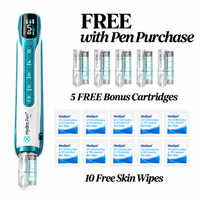
For professionals comparing equipment, the Hydra Pen H6 Advanced Serum Infusion Microneedling Pen with Light Therapy combines serum-infusion microneedling with red and blue LED light and is marketed for beauty professionals. Those features should not be treated as a promise of faster healing or a reason to book closer to an event.
Serum compatibility also requires scrutiny. The FDA has not cleared microneedling devices for use with another product, such as cosmetics or topical medications. A serum-infusion description does not, by itself, establish that an ordinary cosmetic serum is appropriate for delivery through freshly needled skin.
Radiofrequency microneedling is another distinct option. It adds heat delivered through needles and has a different risk profile from conventional needling. LED light is not radiofrequency. If RF is proposed, ask the clinician to explain its additional risks and why it suits your concern rather than assuming that it is simply a stronger version of the same appointment.

Plan aftercare around your actual commitments
The best recovery window is one in which you can follow instructions without making exceptions for social plans. Before booking, check whether you will need to wear makeup, attend an exercise class, swim, use a sauna or spend extended time outdoors.
Makeup trials and professional photography
Schedule a makeup trial after your clinician says makeup is appropriate and your skin has settled. Residual dryness or flaking can affect how foundation sits, even when redness is mild.
Tell your makeup artist about recent procedures. Avoid having someone exfoliate irritated skin aggressively to make a base look smoother. A successful trial should reflect the products and skin condition you expect on the day, not an attempt to cover ongoing recovery.
Sun, travel and skincare products
Ask for a clear sun-protection plan, including when and how to use sunscreen after the procedure. Shade and protective clothing can help reduce exposure, but a beach trip still complicates recovery.
Travel may make follow-up and access to your treating clinician more difficult. Leave room for reassessment before leaving town rather than treating a flight as the end of your recovery window.
Follow the clinician’s instructions on cleansing, moisturizing and resuming retinoids, exfoliating acids or other irritating products. Dr. Pen Store’s guide to microneedling aftercare during the first 72 hours provides background, but your procedure-specific instructions take priority.
What to do if the event is only days away
If you have not yet had the procedure, postpone it. A last-minute microneedling treatment introduces avoidable uncertainty when there is little time to manage irritation or an unexpected reaction.
Keep skincare familiar. Avoid substituting a strong peel, aggressive scrub or another new procedure in pursuit of a quick result. If there is a specific concern, such as a painful breakout or rash, seek advice from a qualified clinician rather than trying to treat it with a pen.
If you have already undergone treatment, do not repeat needling or add exfoliation because the skin looks uneven. Contact the treating provider about persistent symptoms and follow their advice about makeup and product use.
Seek prompt medical assessment for worsening pain, spreading redness, increasing warmth, pus, fever or blistering. These are not issues to disguise for photographs. Let your makeup artist know if recovery is incomplete and avoid applying products against medical advice.
Frequently asked questions
How long before my wedding should I have microneedling? For a fixed, high-priority event, discuss leaving at least four weeks after the final professional session, with more time when your clinician recommends it. Start consultation several months ahead if you are considering a course. No interval guarantees that every reaction will resolve.
Is one week enough time to recover? Some people look substantially recovered within a week, but that is not a dependable wedding-planning strategy. Dryness, sensitivity or pigment changes may last longer. Avoid booking a first session that close to the event.
Can I have microneedling after my makeup trial? You can discuss that sequence with your clinician, but the trial will not tell you how makeup will perform on recovering skin. Ideally, allow the final treatment to heal before testing your event makeup.
Will one session give me a wedding glow? A microneedling treatment may improve some aspects of skin appearance, but “glow” is subjective and cannot be promised. Early swelling is not the same as lasting improvement, and collagen-related changes take time.
Can I do a gentler session at home instead? Do not assume that a lighter at-home session is a predictable, low-risk alternative before an event. Technique, hygiene, device suitability and skin condition still matter. A professional device listing is not an individualized assessment of whether you should use it yourself.
Choose the schedule before choosing the device
Book a consultation with your full event calendar in hand. Agree on a realistic goal, an appropriate recovery buffer and a clear point after which you will not add elective procedures.
If your clinician recommends a Dr. Pen device, ask Dr. Pen Store’s support team to help confirm the exact model and compatible replacement cartridges before ordering. Authentic equipment matters, but it does not replace clinical assessment or make a last-minute appointment a better choice.