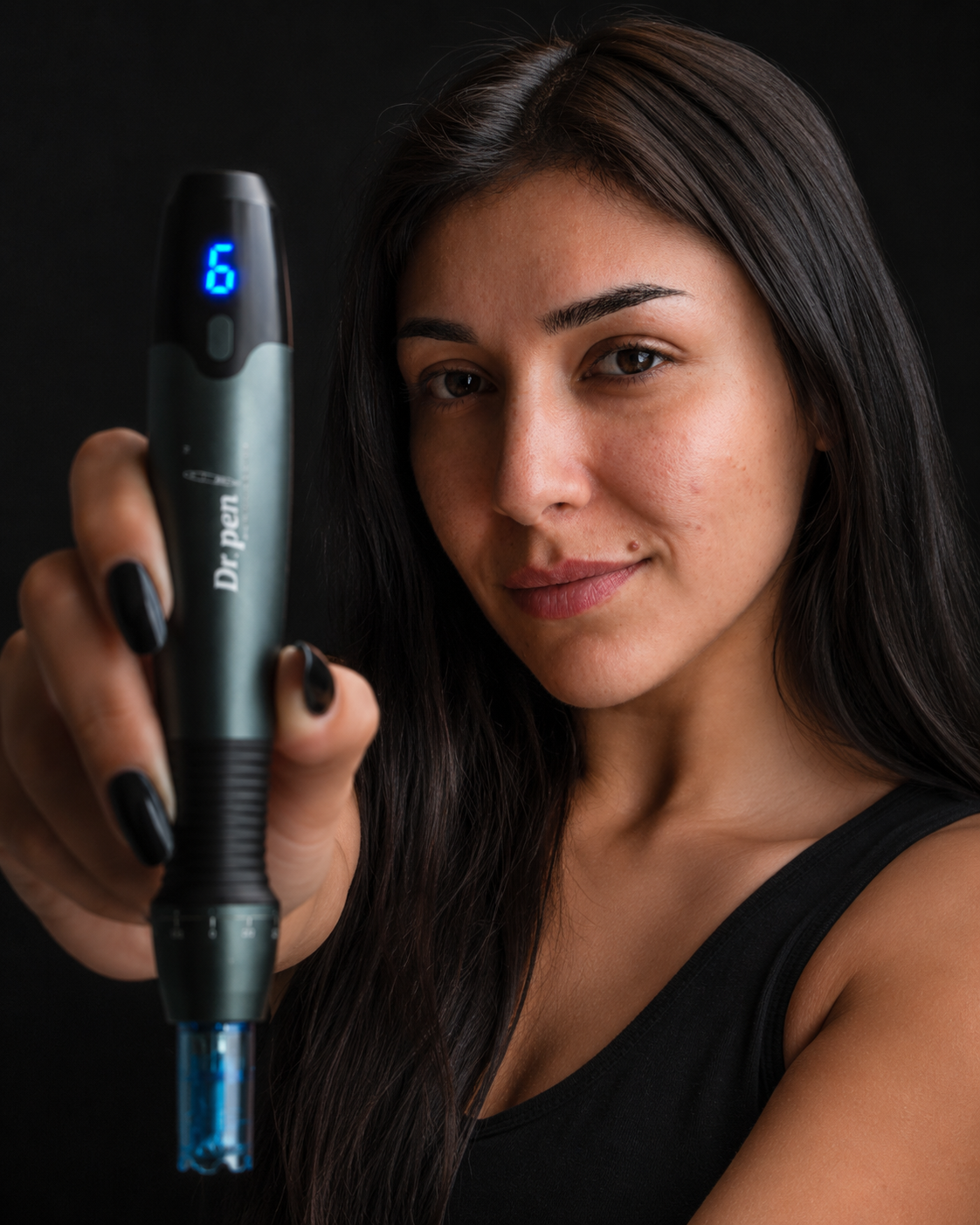
Microneedling with serum can be helpful, but only when the formula is appropriate for freshly needled skin. The safest choice is usually simple, sterile, fragrance-free hydration, not an active-packed anti-aging serum you already use at night. Because microneedling temporarily creates tiny channels in the skin barrier, anything applied during or right after treatment may penetrate more deeply than intended.
That does not mean serum is off-limits. It means ingredient choice, product hygiene and timing matter. This guide explains what is generally safe to apply, what to avoid, when to reintroduce stronger skincare and how to keep your Dr. Pen routine focused on skin comfort rather than irritation.
Microneedling With Serum: What Changes When Skin Is Open?
Microneedling uses fine needles to create controlled micro-injuries in the skin. This process is commonly used to support smoother texture, the look of fine lines, uneven tone and acne scar appearance. It also temporarily increases product absorption, which is why serum choice becomes more important than it is during a normal skincare routine.
The FDA guidance on microneedling devices notes that risks can include irritation, infection, pigment changes and allergic reactions, especially if the device or skin is not handled correctly. A product that feels fine on intact skin can sting, inflame or contaminate freshly treated skin.
That is why microneedling with serum should start with a conservative rule: if you would not put it on irritated or compromised skin, do not apply it while needling. When in doubt, choose fewer ingredients and give your skin time to recover before returning to stronger actives.
The Safest Serum Categories to Apply
For most at-home users, microneedling with serum is safest when the product is hydrating, sterile or specifically appropriate for post-procedure skin. A short ingredient list is a good sign. So is packaging that limits contamination, such as single-use ampoules or an airless pump.
Hyaluronic acid is the most common option because it supports hydration without exfoliating, brightening or resurfacing the skin. Sterile saline can also be used by professionals for glide and moisture, though most home users prefer a simple hydrating serum. Some peptide or barrier-support serums may be suitable after the initial sensitivity calms, but they should still be fragrance-free and non-irritating.
| Serum type | Best timing | What to check |
|---|---|---|
| Sterile hyaluronic acid | During or immediately after, if tolerated | No fragrance, no acids, no retinoids |
| Sterile saline | During treatment for glide | Single-use or properly handled sterile format |
| Barrier-support serum | After redness settles | Ceramides, panthenol or glycerin in a gentle base |
| Peptide serum | Usually 24 to 72 hours later | No added exfoliating acids or perfume |
If you want a deeper ingredient breakdown, Dr. Pen Store has a separate guide to the best serums to use with microneedling, including common ingredients to avoid.
Ingredients to Avoid During and Right After Treatment
The biggest mistake in microneedling with serum is using the treatment as a way to push stronger actives deeper. That may sound efficient, but freshly needled skin is more reactive. Ingredients designed to exfoliate, accelerate cell turnover or brighten pigmentation can be too intense immediately after needling.
Avoid vitamin C serums, especially low-pH L-ascorbic acid, until the skin feels normal again. Retinoids, retinol, tretinoin, glycolic acid, lactic acid, salicylic acid, benzoyl peroxide and strong brightening formulas should also be paused. Fragrance, essential oils and botanical-heavy blends are common triggers for stinging or allergic reactions.
| Avoid applying | Why it can be a problem |
|---|---|
| Vitamin C acids | Stinging, irritation and excess sensitivity |
| Retinoids | Increased dryness, peeling and barrier stress |
| AHA or BHA exfoliants | Over-exfoliation on freshly treated skin |
| Benzoyl peroxide | Burning, dryness and inflammation risk |
| Fragrance or essential oils | Higher chance of irritation or allergy |
| Makeup or tinted skincare | Possible contamination and clogged microchannels |
| DIY kitchen ingredients | Not sterile and unpredictable on open skin |
Also avoid using an old dropper bottle directly on treated skin. Even if the formula is gentle, repeated contact with fingers or skin can introduce microbes into the bottle.
During Versus After: Timing Matters
Microneedling with serum is not one single step. The product you use for glide during treatment may not be the same product you use the next morning. During needling, keep the formula extremely simple. Immediately after, focus on calming hydration and barrier support. Over the next several days, reintroduce other products gradually.
A practical timeline looks like this: during treatment, use only a sterile or very low-irritation hydrating product if your device instructions allow it. For the first 24 hours, keep skin clean and hydrated. Avoid makeup, exfoliants, retinoids, hot workouts, saunas, swimming pools and direct sun exposure. From 24 to 72 hours, you may add a bland moisturizer if the skin is no longer stinging. Strong actives can usually wait until the skin feels fully back to normal.
For a more detailed day-by-day routine, use the Dr. Pen Store guide on what to put on your skin after microneedling. It is especially useful if you are deciding when to restart your usual products.
How to Choose a Serum for a Dr. Pen Device
If you are doing microneedling with serum using a Dr. Pen device, do not choose your serum based only on the skin concern you want to improve. Choose it based on needle depth, skin sensitivity, treatment area and hygiene first. A deeper or more intense session makes conservative skincare even more important.
Device control also matters. For users comparing tools for targeted work on scars or wrinkles, the Dr. Pen A10 Perfect Skin is designed to provide control and precision for more intensive-looking treatment goals. That does not change the serum safety rules. Whether you use an A10 or another compatible Dr. Pen model, freshly treated skin still needs sterile, simple and non-irritating products.
Needle depth is another key variable. Shorter cosmetic depths are often associated with superficial product absorption and glow-focused routines, while deeper treatments require more caution and may be better handled by trained professionals. If you are unsure what depth matches your concern, review the Dr. Pen Store guide to choosing microneedling needle size before planning your serum routine.

A Practical Safety Checklist Before You Start
A careful microneedling with serum routine starts before the serum touches your face. Cleanliness reduces avoidable irritation and infection risk, especially when you are treating at home. Always read your device instructions and do not exceed the depth or frequency recommended for your experience level.
Use this checklist before every session:
- Start with clean hands, a cleansed face and a clean treatment surface.
- Use a new sterile cartridge every time, then discard it after one session.
- Do not share cartridges, devices or open serum bottles with anyone else.
- Choose a serum with no fragrance, retinoids, acids, exfoliants or essential oils.
- Avoid touching the serum dropper to your skin, fingers or device cartridge.
- Stop if you feel sharp pain, unusual burning, swelling or excessive bleeding.
- Keep pets, hair, towels and makeup brushes away from the treatment area.
The cartridge rule is not optional. Replacement cartridges are single-use items because needles can dull, bend and collect biological material after treatment. Reusing them may increase skin trauma and contamination risk, even if they appear clean.
When to Skip Serum, or Skip Microneedling Altogether
Skip microneedling with serum if your skin is already inflamed, infected or actively breaking out in the treatment area. Do not needle over open cuts, cold sores, active acne lesions, eczema flares, psoriasis plaques, sunburn or unexplained rashes. Applying serum over those areas does not make treatment safer. It can make irritation worse.
You should also avoid microneedling if you have a history of keloid scarring, poor wound healing or a medical condition that affects healing unless a qualified clinician clears it. If you use blood thinners, isotretinoin or prescription acne treatments, ask your healthcare provider before needling. The same goes for pregnancy, breastfeeding or any recent cosmetic procedure.
Sensitive skin does not automatically rule out microneedling, but it does narrow your product choices. If your skin stings from a moisturizer on a normal day, do not experiment with a new serum during treatment. Patch test gentle products on intact skin first and keep your first sessions conservative.
What About Vitamin C, Retinol, Peptides and Exosomes?
After microneedling with serum, many people want to know when they can use performance ingredients again. The answer depends on the ingredient and how your skin is healing.
Vitamin C and retinoids are better saved for later. They can be excellent parts of a normal skincare routine, but they are not ideal on freshly needled skin because they may increase stinging, peeling or inflammation. Exfoliating acids belong in the same delayed category. Reintroduce them only when redness, tightness and tenderness are gone.
Peptides are more flexible, but timing still matters. A simple peptide serum may be reasonable after 24 to 72 hours if the skin is calm, but avoid formulas that combine peptides with acids, fragrance or strong brighteners. Exosome and growth factor products deserve extra caution. Use only products from trustworthy sources and follow professional guidance, especially after deeper treatments.
The safest mindset is not to maximize absorption at any cost. The goal is to support the skin while it repairs. Hydration, barrier comfort and infection prevention matter more than stacking active ingredients immediately after treatment.
Frequently Asked Questions
Can I use hyaluronic acid while microneedling? Yes, a sterile, fragrance-free hyaluronic acid serum is one of the most commonly used options. Avoid formulas that combine hyaluronic acid with vitamin C, acids, fragrance or retinoids during treatment.
Can I use my normal serum after microneedling? Not right away if it contains actives. Wait until redness, tenderness and tightness have settled before reintroducing retinol, vitamin C, exfoliating acids or acne treatments.
Is microneedling with serum safe at home? It can be done more safely when you use the correct device, sterile single-use cartridges, clean technique and gentle serum. Deeper treatments, active skin conditions and medical concerns should be discussed with a professional.
Can I apply moisturizer after microneedling? Yes, but choose a bland, fragrance-free moisturizer and wait if your skin is actively stinging. A simple barrier-support product is usually safer than an anti-aging cream immediately after needling.
What serum should I never use during microneedling? Do not use retinol, tretinoin, vitamin C acids, AHA or BHA exfoliants, benzoyl peroxide, essential oils, perfume-heavy formulas or DIY mixtures during treatment.
Build a Safer Dr. Pen Routine
The right serum can support comfort and hydration, but the wrong one can turn a good treatment into unnecessary irritation. Keep your routine simple, use genuine single-use cartridges and match your device settings to your skin goal.
If you are choosing a Dr. Pen device or replacing cartridges, Dr. Pen Store focuses on genuine pens, compatible cartridges and practical product guidance for at-home and clinic routines. Start with the correct tool, pair it with a conservative serum choice and give your skin enough recovery time between sessions.