


Choosing a skin pen treatment provider for darker skin means checking more than the device name or a clinic’s before-and-after gallery. You need someone who can distinguish scars from pigmentation, recognize your risk of post-inflammatory hyperpigmentation (PIH) and explain how they would respond if your skin darkened after treatment.
Darker skin is not automatically unsuitable for microneedling. The deciding factors are your diagnosis, medical history, the device being used and the practitioner’s judgment. Use the consultation to assess those factors before paying for a package.
Clarify what “skin pen” means
SkinPen is a specific brand of professional microneedling device, while microneedling is the procedure. Dr. Pen is a separate brand. Some clinics use “skin pen” loosely, so ask for the exact manufacturer and model rather than assuming every treatment uses the same equipment.
Conventional microneedling creates controlled punctures that stimulate a wound-healing response. It may improve the appearance of certain acne scars and textural concerns. It does not automatically treat every type of dark mark.
Also establish whether the proposed procedure is standard mechanical microneedling or radiofrequency (RF) microneedling. RF devices add heat and have different risks; evidence and safety claims should not be transferred casually between them.
Our comparison of SkinPen microneedling and at-home pens explains why the treatment setting and clinical supervision matter alongside the equipment.
What should a skin pen treatment provider know about darker skin?
A competent practitioner should explain PIH in plain language: inflammation or injury can leave an area darker after the original irritation settles. Microneedling can itself cause that inflammation, even though conventional devices do not use laser energy or RF heat.
Ask how the provider assesses your individual risk. Relevant history includes dark marks after acne, waxing, burns, eczema or previous cosmetic procedures. A tendency to develop raised scars also needs assessment.
Fitzpatrick skin types IV through VI often feature in discussions of darker skin, but this classification describes responses to ultraviolet exposure. It is not a substitute for examining your skin or understanding your history, and ethnicity alone does not determine a treatment plan.
The provider should also distinguish among:
- Depressed acne scars: Changes in skin structure that may respond to an appropriate scar-treatment plan.
- Post-acne dark marks: Pigment changes that can remain even when the skin surface is smooth.
- Melasma or another pigment disorder: Conditions requiring a separate diagnosis and management strategy.
A consultation that treats all three as the same problem is a reason to pause. In some cases, controlling acne, irritation or pigmentation before considering a procedure is the more appropriate first step.
Verify credentials and experience with comparable skin
Before booking a skin pen treatment, verify the practitioner’s active professional license and whether the procedure falls within their permitted scope of practice. Requirements vary by state, so a training certificate alone does not answer that question.
Ask who will assess you, who will perform the procedure and who takes responsibility for complications. If pigmentation is your main concern, a dermatologist experienced in skin of color can help establish the diagnosis before you commit to treatment.
Experience should be relevant to your complexion and concern. Request examples involving similar skin tones and the same type of scarring or pigmentation, not simply a large gallery of unrelated cases.
Useful clinical photographs have consistent lighting, angles and camera settings. They should identify the treatment course and follow-up interval. Photographs taken immediately afterward cannot establish a healed result, and lighting differences can exaggerate apparent changes in pigmentation.
Separate clinical evidence from promotional polish
When evaluating skin pen treatment photographs, ask whether the images are unfiltered and whether other treatments contributed to the outcome.
A beautiful clinic tour is different evidence altogether. Tools such as Diane’s AI-powered real estate videos can turn property photographs into polished narrated marketing, illustrating why a presentation of premises tells you little about clinical competence. Assess credentials, documented outcomes and follow-up arrangements separately from production quality.
Check device safety and infection-control standards
Ask the clinic to identify the device and explain its current regulatory status for the proposed use. FDA clearance is device-specific and indication-specific. It does not mean every treatment marketed under “microneedling” is cleared, nor does it guarantee an individual result.
The FDA’s microneedling safety guidance covers risks including infection, scarring and pigment changes. It also explains that the FDA has not cleared microneedling devices for use with other products, such as cosmetics or topical medicines.
Use these questions to make the clinic’s safety process concrete:
| What to check | What the provider should explain |
|---|---|
| Needle cartridge | A sterile, single-use cartridge compatible with the exact device, with packaging intact before use |
| Reuse policy | A used cartridge is discarded, not saved for another appointment |
| Device handling | Cleaning and protective barriers follow the manufacturer’s instructions |
| Products applied | Which products are used, why they are appropriate and whether their use follows device instructions |
| Complication support | Who you contact, how promptly concerns are assessed and when medical referral is needed |
For a skin pen treatment, these details matter more than vague claims about a “medical-grade” pen. A cartridge should never be reused at a later visit, even for the same patient.
There is also no universal needle-depth setting that makes treatment safe for every darker complexion. Avoid providers who offer a fixed aggressive protocol without examining the treatment area.
Ask for an individualized plan and written aftercare
A proper assessment should cover active acne, infection, cold sores, eczema, wound-healing problems and any history of raised scars. Tell the clinician about medications, recent procedures and current skincare, including retinoids and exfoliating acids. Do not stop prescribed medication on your own.
Your provider should explain why they recommend treatment now, whether another approach should come first and how they will judge improvement. A small test area may sometimes be appropriate, but it cannot guarantee that a larger treatment will not cause PIH.
The skin pen treatment plan should also specify how recovery will be monitored. Temporary redness may be less conspicuous on darker skin, so warmth, swelling, tenderness and changes in color deserve attention too.
Expect written instructions covering cleansing, moisturizer, sun protection, makeup and when to restart potentially irritating products. Do not assume that a serum suitable for ordinary skincare is suitable for freshly needled skin.
Contact the treating clinician promptly for increasing pain, blistering, drainage, spreading warmth or worsening discoloration. Fever or rapidly worsening symptoms warrant urgent medical assessment.

Compare total costs, not just the advertised session price
There is no single reliable price that applies to every provider or treatment course. Location, clinician qualifications, treatment area, device type and the complexity of your concern can all affect the quote. RF microneedling should not be treated as directly interchangeable with conventional microneedling when comparing prices.
Ask for a written estimate that separates the consultation, individual sessions, any proposed course, aftercare products and follow-up. Establish whether reviews are included and what happens if treatment needs to stop because your skin reacts poorly.
A discounted package is not good value if you have not yet received a diagnosis. You should understand the cancellation terms before committing to multiple appointments.
Compare skin pen treatment quotes against the same intended outcome. A plan targeting depressed scars is not equivalent to one promising a brighter complexion, even if both involve a pen-shaped device.
Ask the clinician to define a review point rather than promising a fixed number of sessions regardless of response. Collagen remodeling takes time, and results should be assessed after healing, not while temporary swelling makes the skin look smoother.
The American Academy of Dermatology’s microneedling overview provides additional context on treatment uses, recovery and the importance of qualified care.
Keep device shopping separate from pigment-treatment decisions
Knowing which equipment a provider uses can help you ask better questions, but owning the same brand does not reproduce a clinical assessment. A genuine device does not remove the risks associated with an incorrect diagnosis, unsuitable technique or inappropriate aftercare.
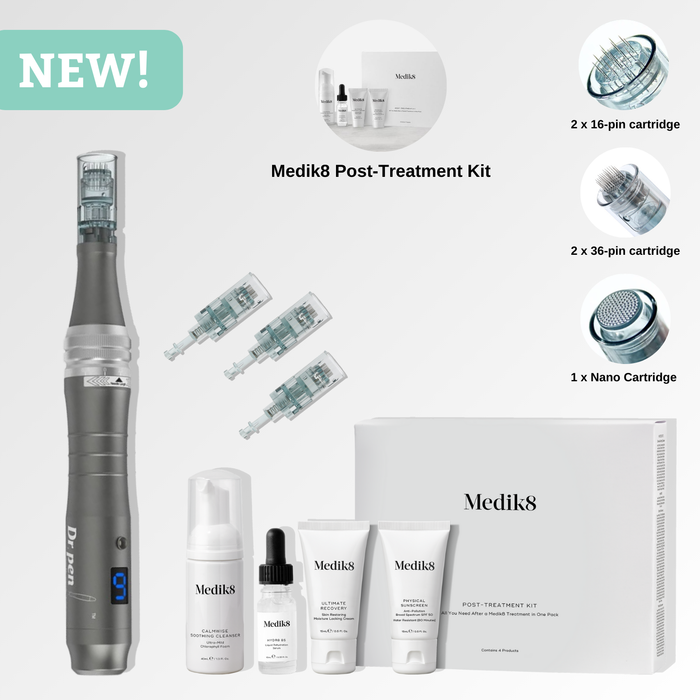
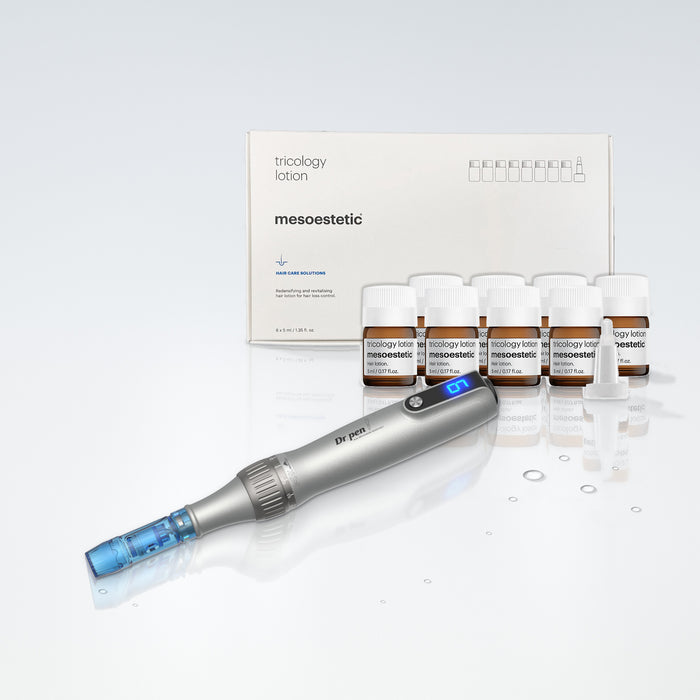
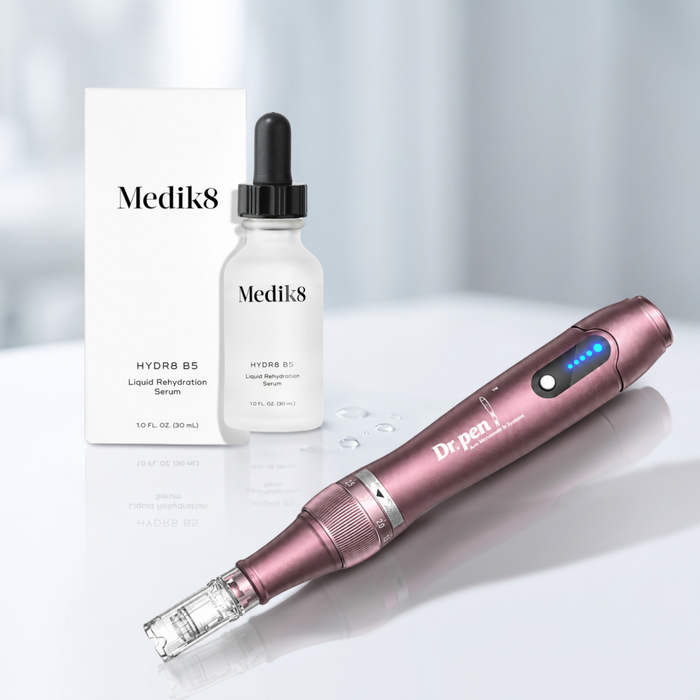
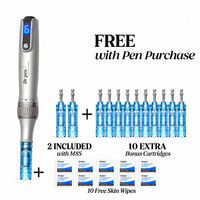
If you are researching Dr. Pen products alongside professional treatment, the Dr. Pen A20 Advanced Brightening & Radiance Bundle pairs the A20 microneedling pen with iS Clinical Brightening Serum, a botanical serum for the appearance of dark spots and uneven tone.
That pairing is a retail bundle, not evidence that the serum should be introduced through microneedling channels or applied immediately after a procedure. Ask your clinician whether either product belongs in your plan and, if so, when the serum can be used on intact, recovered skin.
A skin pen treatment consultation should come before an equipment purchase when you have unexplained pigmentation, melasma or a history of troublesome PIH. Buying a brightening product cannot replace determining why the skin is darkening in the first place.
Frequently asked questions
Is microneedling suitable for Black and brown skin? It can be suitable, but complexion alone cannot establish candidacy. The provider should assess the concern being treated, previous pigment reactions, scarring history and current skin health. Claims that darker skin carries “no risk” of pigment changes are not credible.
Is SkinPen the same as Dr. Pen? No. They are different brands. Ask for the exact model, its intended use and the practitioner’s experience with it. A device name should not be used as a substitute for explaining the procedure or its risks.
How long do skin pen treatment results last? There is no universal duration. Structural improvement in some scars can persist, while aging, new acne and recurring pigmentation can change the appearance over time. Ask what outcome is realistic for your diagnosis and what would justify maintenance rather than accepting a standing package automatically.
Can I buy a SkinPen and recreate the treatment at home? SkinPen is a professional medical device, not a routine consumer skincare tool. Online availability does not establish authenticity or suitability for home use. For darker skin with pigmentation concerns, professional assessment is safer than trying to reproduce a clinic procedure from online instructions.
Should I expect my dark marks to disappear? No provider should guarantee that. Dark marks and depressed scars require different assessments, and the procedure can sometimes worsen pigmentation. Ask what alternatives are available and what the clinician would recommend if pigment change, rather than texture, is your main concern.
Choose the assessment before the equipment
The strongest reason to choose a skin pen treatment provider is a clear, individualized explanation of benefits, risks and follow-up, not a brand logo or a heavily discounted course.
If your clinician recommends a Dr. Pen-based approach, use DrPenStore’s guide to choosing a professional microneedling pen to organize questions about authenticity, model selection and cartridge compatibility. Keep those purchasing decisions separate from the medical decision about whether your skin should be treated.