


Choosing a dermapen skin needling provider for acne scars starts with the consultation, not the device advertised on the clinic’s website. A suitable provider should identify your scar types, explain whether needling can reasonably help and show how they manage infection, pigmentation changes and follow-up. An impressive before-and-after gallery cannot replace those checks.
Before paying for a treatment package, use the questions below to compare providers on clinical judgment, hygiene and transparency. The aim is to find someone who can explain both why they recommend treatment and when they would choose something else.
Start with a scar assessment, not a treatment package
Acne can leave depressed scars, raised scars and flat marks that look quite different but are sometimes marketed together. Those differences matter because they do not respond to the same treatments.
The American Academy of Dermatology’s microneedling guidance describes microneedling as an option for making acne scars less noticeable. That does not mean it is the best first treatment for every scar.
| Finding at consultation | What a thoughtful provider should discuss |
|---|---|
| Shallow boxcar scars | Whether microneedling could improve texture and how improvement will be assessed |
| Rolling or tethered depressions | Whether underlying attachments need assessment for subcision or another approach |
| Deep ice pick scars | Whether a targeted treatment, such as clinician-performed TCA CROSS, may be more appropriate |
| Flat brown or red marks | Whether the main concern is pigmentation or persistent redness rather than an indented scar |
| Raised scars or a history of keloids | Whether needling is unsuitable and specialist assessment is needed |
A responsible dermapen skin needling provider should explain which findings apply to you rather than promising the same treatment series to everyone. Mixed scars may need a staged plan or referral, not simply deeper needling.
Ask the practitioner to identify the areas they expect to improve and those likely to remain visible. This gives you a more useful starting point than a general promise of “smoother skin.”
Verify who will assess you and who will perform treatment
Find out the name and professional license of the person actually performing the procedure. The clinician pictured on the website may not be the person treating you.
In the US, permitted practice varies by state, professional license, procedure and supervision arrangements. Check the relevant state licensing board rather than assuming a training certificate establishes legal authority. If supervision is required, ask who provides it and how that person becomes involved if a complication occurs.
Experience should also match your concern. Ask about treating atrophic acne scars, patients with your skin tone and post-inflammatory hyperpigmentation, the darkening that can follow skin inflammation. A provider should be comfortable discussing complications without dismissing them as impossible.
Useful questions include:
- Who decides whether I am a suitable candidate, and who performs each session?
- What experience do you have with scars like mine and my skin tone?
- Who evaluates a suspected infection, prolonged reaction or pigmentation change?
- Where can I verify your license and any required supervision?
When comparing dermapen skin needling providers, favor clear answers over impressive-sounding course titles. Our guide to microneedling provider credentials explains the distinction between training, licensure and legal scope of practice.
Confirm the exact device and its intended use
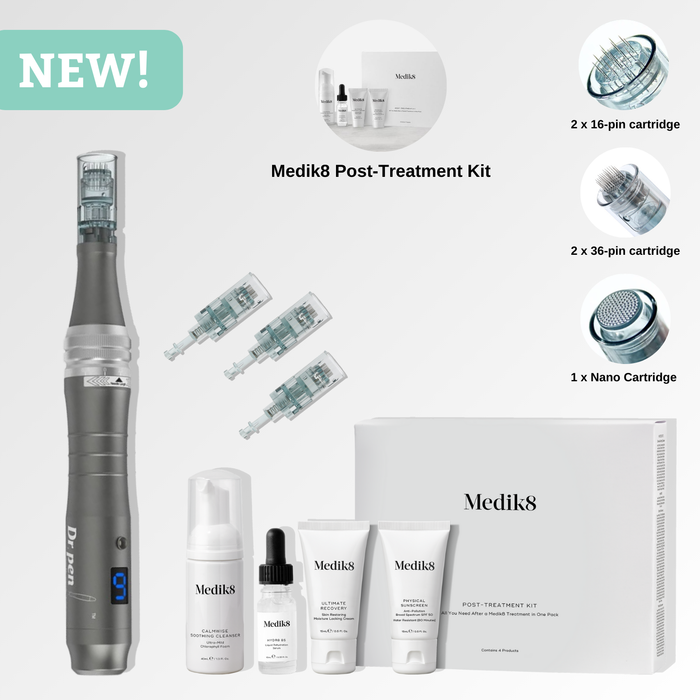
Although people often use “dermapen” as shorthand for a motorized microneedling pen, Dermapen, Dr. Pen and SkinPen are distinct brands. Ask for the manufacturer and exact model instead of accepting “medical-grade pen” as a complete answer.
The FDA’s guidance on microneedling devices explains that certain devices are cleared for specific uses. Clearance is device-specific and indication-specific. It does not establish that every pen, cartridge, treatment area or advertised combination has been reviewed.
Ask the provider to explain how the proposed use fits the device’s labeling and your circumstances. They should also be able to identify the source of the device and compatible cartridges. A genuine product matters, but authenticity alone does not establish the practitioner’s competence.
Clarify whether the proposed treatment is conventional mechanical microneedling or radiofrequency microneedling. Radiofrequency devices add energy and require a separate discussion of risks, suitability and operator experience. The two procedures should not be presented as interchangeable.
For dermapen skin needling, the useful question is not simply which pen is “best.” It is whether the provider can explain why that particular device and treatment approach suit your scars.
Compare dermapen skin needling consultations on medical screening
A proper consultation includes your medical history, not just a photograph and a price quote. Expect questions about active acne, current skincare, prescriptions, previous procedures and how your skin has healed after injury.
Tell the provider about eczema or rosacea flares, cold sores, infections, impaired healing, immune suppression, bleeding disorders and any history of abnormal scarring. These findings may change the plan, require medical review or mean treatment should be postponed.
Discuss isotretinoin use, blood-thinning medicines and other relevant treatments with the clinician. Do not stop prescribed medication to qualify for an appointment. A blanket rule copied from a booking form is not a substitute for an individualized decision.
The provider should also ask about allergies or previous reactions to topical anesthetics, antiseptics, adhesives and skincare products. If numbing medication is planned, ask who selects and administers it and how adverse reactions are managed.
A provider willing to postpone treatment can be a better choice than one willing to treat immediately. Inflamed acne, an active skin infection or a current skin-disease flare needs assessment before elective scar treatment. Needling should not be sold as a shortcut around controlling the underlying condition.
Check cartridge handling and infection-control procedures
A sterile cartridge is only one part of infection control. The treatment surface, hand hygiene, device handling and disposal process also matter.
Ask whether the provider uses a new, sterile, single-use cartridge for every session, including repeat visits by the same patient. It should be compatible with the exact device, within its expiration date and opened from intact packaging at the appointment. A cartridge should not be saved for your next visit.
For any dermapen skin needling appointment, the provider should be able to describe the manufacturer’s cleaning and barrier requirements for reusable equipment. Gloves and a disposable cartridge do not remove the need to prevent contamination elsewhere.
You can ask to see the sealed cartridge before treatment. You can also ask how the clinic records the device model and cartridge lot information so a problem can be traced later. Straightforward questions about safety should not provoke irritation or evasiveness.
Discuss what products will contact the treated skin. An ordinary cosmetic serum is not automatically suitable for use during a procedure that penetrates the skin. The FDA has not cleared microneedling devices for delivering cosmetics, topical medications, vitamins or blood products such as platelet-rich plasma into the skin. Ask about any proposed combination separately rather than assuming the device’s clearance covers it.
Get a written treatment and recovery plan
Before purchasing multiple sessions, ask for a written outline covering the treatment goal, approximate schedule, expected recovery and point at which results will be reviewed. The plan can change as your skin responds, but the provider should explain how those decisions are made.
Scar remodeling is gradual. A reliable clinic will not promise permanent scar removal, a guaranteed percentage improvement or a result by a fixed date. Sessions are generally separated by weeks to allow recovery, with timing adjusted to the treatment and your response.
A dermapen skin needling plan should also explain what happens if progress is limited. Continuing the same procedure indefinitely is not a substitute for reassessment or discussion of another approach.
Before-and-after photographs are most useful when lighting, camera angle, facial expression and distance are consistent. Ask whether photographs show this provider’s own patients and how long after treatment they were taken. Immediate redness or swelling can make texture appear different without demonstrating lasting improvement.

Evaluate aftercare and access to help
Recovery instructions should be specific enough to follow at home. Ask which cleanser, moisturizer and sunscreen are appropriate, when you can resume makeup and how long to pause potentially irritating skincare. Timing should reflect your treatment and recovery rather than a generic social-media routine.
Your provider should distinguish expected effects from warning signs. Temporary redness, tenderness or swelling may occur, but worsening pain, spreading redness, increasing warmth, pus or fever warrants prompt medical assessment. Ask whom to contact outside normal office hours and what to do if that person is unavailable.
Aftercare for dermapen skin needling should not depend on buying an expensive product package. The clinic should explain why each recommended product is suitable and provide practical alternatives when appropriate.
Written instructions should also address sun exposure and picking or scrubbing treated skin. If a reaction develops, the provider should offer a clear route to assessment rather than telling you to keep applying products until it settles.
Compare the full cost, not just the session price
Request an itemized quote that distinguishes consultation, treatment, anesthetic, follow-up and any proposed add-ons. Ask whether a review appointment is included and how complications are assessed. A low advertised session price may not describe the full course of care.
If a package is recommended, check cancellation terms and what happens if your clinician later advises stopping or changing treatment. Avoid paying for a long series before your scars and medical history have been assessed.
A useful way to compare dermapen skin needling quotes is to ask each provider the same question: “What is included, when will we review progress and what happens if this is not the right treatment for me?”
Discounts are not automatically a warning sign, but time-limited offers should not replace informed consent. Be cautious if a clinic guarantees scar removal, pressures you to pay immediately or presents optional treatments as essential without explaining the evidence and additional risks.
Keep clinic treatment separate from product shopping
Owning a microneedling pen is not equivalent to having an acne-scar assessment. A retail device cannot determine whether a depression is tethered, distinguish scarring from pigmentation or manage a complication. Do not copy a clinic’s treatment settings or attempt deeper scar treatment at home.
If you are researching devices alongside professional care, our guide to choosing a professional microneedling pen covers purchasing considerations such as authenticity, cartridge compatibility and regulatory claims. Those checks complement, rather than replace, provider selection.
For readers also concerned about uneven tone, the Dr. Pen A20 Advanced Brightening & Radiance Bundle pairs the A20 pen with iS Clinical Brightening Serum. The serum is intended for the appearance of dark spots and uneven tone, which is a different goal from remodeling depressed acne scars.
A product bundle does not establish that its serum is suitable for use during or immediately after dermapen skin needling. Ask your treating clinician whether and when it belongs in your skincare routine, and follow the relevant product instructions. Do not assume that products sold together should be applied together during a procedure.
Frequently asked questions
Can microneedling remove acne scars completely? It may make some depressed acne scars less noticeable, but complete removal is not a realistic promise. Scar type, skin response and the need for other treatments affect the outcome.
Should I choose a dermatologist or a medical spa? Compare the actual practitioner, assessment process and clinical oversight rather than the business label. A board-certified dermatologist experienced in acne scars is a useful starting point, particularly for mixed scars, active skin disease, keloid history or previous treatment complications.
How many sessions should a provider recommend? There is no single number appropriate for everyone. A defensible dermapen skin needling recommendation includes an initial assessment, a review point and an explanation of what would justify continuing, changing or stopping treatment.
Can darker skin tones be treated? Microneedling may be an option, but pigmentation changes remain a risk. Choose someone experienced with your skin tone who discusses post-inflammatory hyperpigmentation, sun protection and a plan for managing an unwanted reaction.
Can I have treatment while I still have acne? Active inflamed acne should be assessed before scar treatment. A provider may recommend controlling breakouts first rather than needling affected areas and risking further inflammation or complications.
Before you book
Arrange a consultation before committing to a package. Leave with a clear scar assessment, the practitioner’s name and credentials, the exact device, an explanation of cartridge handling and written information about recovery, costs and follow-up.
If any of those answers are missing, seek another opinion. The strongest reason to choose a provider is a treatment plan that fits your scars and medical history, not a particular pen, promotional photograph or discount.